Which FDM material should I use for a functional part?
The right answer depends on what the part must survive. For buyers searching for functional 3D printing in Montreal, material selection should consider mechanical load, stiffness, impact, operating temperature, outdoor exposure, chemicals, flexibility, wear and print orientation.
When should you consider nylon for FDM 3D printing?
Nylon is widely used for engineering parts because suitable grades can offer useful toughness, wear behavior and durability.
- Functional brackets
- Machine components
- Housings
- Calendrier
- Wear components
- Robotics parts
- Composants fonctionnels à faible volume
Nylon is also available in reinforced formulations, which can change stiffness and dimensional behavior. The exact grade matters, so all nylon should not be treated as one material.
When should you use polycarbonate?
Polycarbonate can be considered when a functional part requires an engineering thermoplastic profile beyond general-purpose prototype materials. Suitability still depends on the exact grade, geometry and operating conditions.
Potential applications can include mechanical housings, protective components, functional prototypes, industrial brackets and machine interfaces.
What does carbon-fiber reinforcement do in FDM?
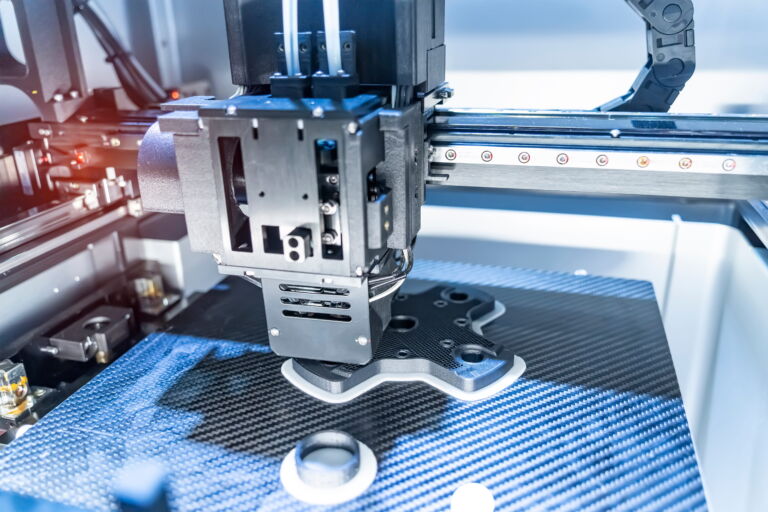
Carbon-fiber-reinforced FDM materials are commonly considered when increased stiffness and reduced flex are useful. The term can describe different material systems, so buyers should confirm the base polymer and reinforcement method instead of assuming all “carbon fiber filament” behaves the same.
Potential applications can include stiff brackets, robotics structures, fixtures, mounting components and lightweight engineering parts.
What about glass-fiber-reinforced materials?
Glass-fiber reinforcement provides another way to modify stiffness and mechanical behavior in a thermoplastic. As with carbon fiber, finished performance depends on the base polymer, reinforcement, geometry, printing process and load direction.
The selection should answer a requirement such as stiffness, durability or environmental performance rather than simply choosing a reinforced material because it sounds stronger.
Can Kevlar be used in 3D printed engineering parts?
Kevlar and aramid reinforcement can be used in certain specialized additive-manufacturing material systems. The exact manufacturing approach matters because aramid reinforcement is not the same as a standard general-purpose thermoplastic filament.
Where appropriate, it may be considered when its characteristic toughness and reinforcement behavior match the application. The project should be reviewed around the specific material system, geometry and loading.
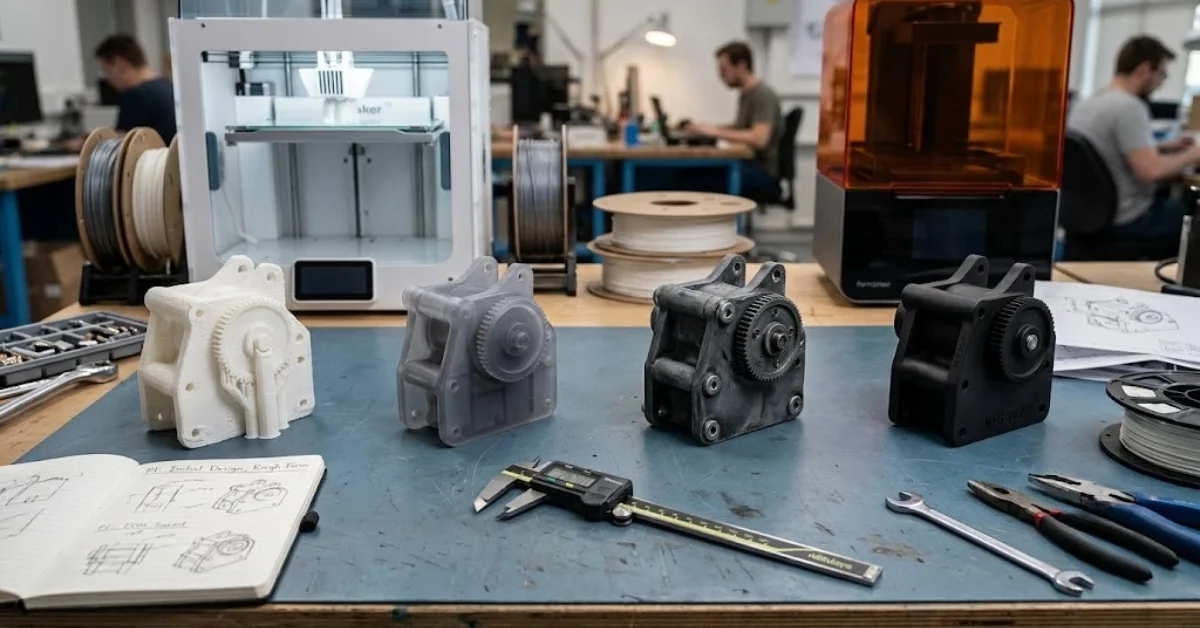
How do nylon, polycarbonate and reinforced FDM materials compare?
| Material family | Why buyers consider it | Important design questions |
|---|---|---|
| Nylon | Tough functional parts, wear applications, fixtures and engineering components | Grade, moisture, stiffness, wear, load and dimensional requirements |
| Polycarbonate | Functional components requiring an engineering thermoplastic | Temperature, loading, print conditions, geometry and environment |
| Carbon-fiber reinforced | Higher stiffness and reduced flex for suitable components | Base polymer, reinforcement type, orientation and load direction |
| Glass-fiber reinforced | Stiff reinforced thermoplastic applications | Base polymer, wear, geometry and required mechanical behavior |
| Aramid/Kevlar reinforced | Specialized reinforced applications where toughness characteristics are useful | Exact material system, reinforcement method and application requirements |
What kinds of parts benefit from engineering-material FDM?
See 3DRM Tech's support for robotics and automation et industrial manufacturing.
Do engineering materials make every printed part stronger?
No. A more advanced material cannot compensate for poor part design, weak load orientation or an unsuitable manufacturing process.
If a component requires a metal bearing interface, high structural stiffness or a machined precision feature, Usinage CNC may be more appropriate. In other cases, a printed body and machined insert can work together.
Frequently asked questions about engineering FDM materials
What is the best 3D printing material for a functional part?
There is no single best material. The choice depends on load, stiffness, impact, temperature, environment, geometry and how the part will be used.
Is nylon good for functional 3D printed parts?
Nylon can be a strong candidate for many functional components because suitable grades can provide useful toughness and wear behavior.
Is carbon-fiber 3D printing stronger than regular plastic?
Carbon-fiber reinforcement can increase stiffness in suitable material systems, but performance depends on the base polymer, reinforcement architecture, print orientation and part design.
Can polycarbonate be 3D printed?
Yes. Polycarbonate is used in suitable FDM applications, but it requires appropriate equipment, processing and design decisions.
Can Kevlar be used in FDM parts?
Kevlar or aramid reinforcement is available in certain specialized additive-manufacturing systems. The exact material and reinforcement method should be confirmed for the application.
Where can I get engineering-material FDM printing in Montreal?
3DRM Tech is based in Mount Royal, Quebec and focuses on functional FDM manufacturing alongside SLS, SLA, CAD, CNC machining, composites and low-volume production.
Need a functional part in an engineering material?
Send the CAD file and tell us what the part needs to do, where it operates and what loads it sees. 3DRM Tech can review the geometry, material and manufacturing route.
Request a Material & Process Review →