
Additive vs. Subtractive Manufacturing
3D printing vs. CNC machining: the right choice depends on material, geometry, tolerance, finish, quantity and what the component must do.
3D printing builds a part layer by layer. CNC machining starts with solid stock and removes material using cutting tools. That fundamental difference affects almost every practical decision: which materials are available, what shapes can be made, how tightly dimensions can be controlled and what the finished part costs.
Neither process is universally better. A hollow polymer duct with internal channels and a precision aluminium shaft solve different problems. Many real projects also use both: print early prototypes, machine the production component, or add machined interfaces and inserts to a printed body.
Because 3DRM Tech provides 3D printing and CNC machining and metalworking in Montreal, recommendations can be based on the part rather than one available machine.
Short answer
Choose 3D printing when complex geometry, rapid iteration, customization or low tooling commitment lead the project. Choose CNC when the part needs machined metal, accessible precision features, strong stock materials or an as-machined finish. Use both when different features or development stages have different requirements.
01Additive and subtractive manufacturing
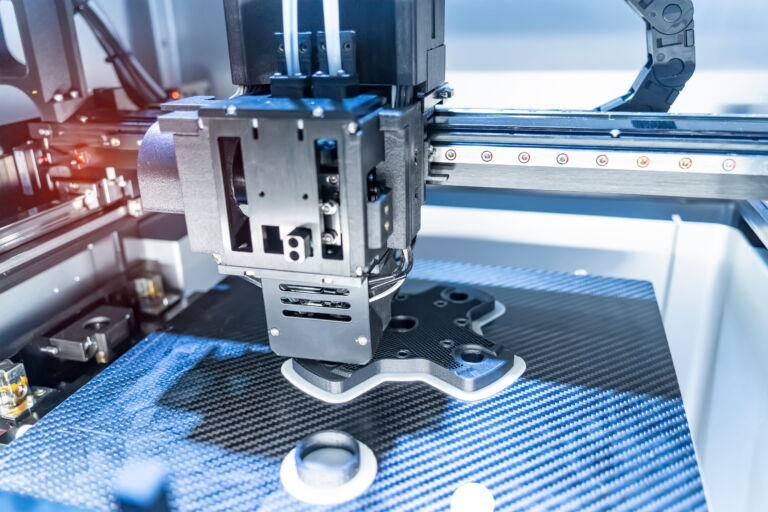
CNC is subtractive: cutters remove material from a block, plate, rod or other stock form. 3D printing is additive: the machine places or fuses material only where the digital model requires it. CNC is constrained by tool reach, workholding and setups. Printing is constrained by layer behaviour, support strategy, build volume and process-specific rules.
02Quick decision table
| Requirement | Often points toward | Why |
|---|---|---|
| Metal and tight interfaces | CNC | Machined stock materials and controllable precision features |
| Complex internal geometry | 3D printing | Additive processes can create shapes inaccessible to cutters |
| Fast design iteration | 3D printing | Revised CAD can move directly into another build |
| Flat plates, shafts and prismatic parts | CNC | Geometry aligns well with subtractive operations |
| Organic, consolidated or lightweight shapes | 3D printing | Material can be placed around function |
| Printed body with precision interface | Both | Use each process where it adds value |
03Materials and mechanical performance
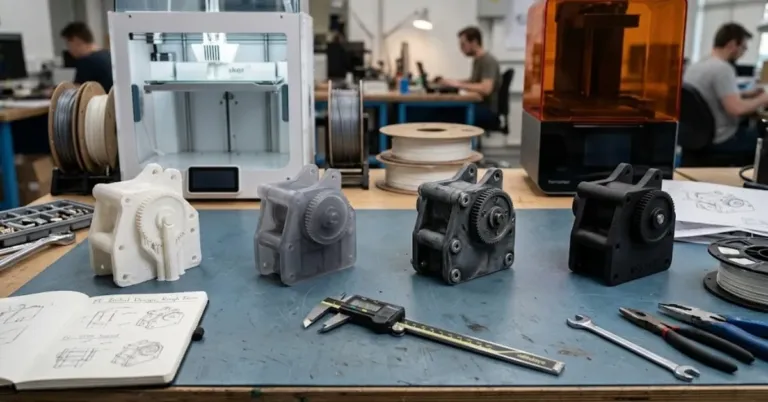
CNC commonly processes aluminium, steel, brass, titanium and engineering plastics. 3D printing covers thermoplastic filament, SLS nylon, photopolymer resin and other process-specific materials. Do not compare only generic labels such as “plastic” and “metal.” Compare actual grades, datasheets, load direction, temperature, chemical exposure and service conditions.
Machining a component from solid stock can provide strong, familiar material performance. Printed components can be highly capable, but process, orientation and internal structure may affect their behaviour.
04Tolerance and accuracy
CNC is generally the stronger choice for tight dimensions, bearing fits, precision holes and controlled mating surfaces. Printed accuracy varies by FDM, SLS or SLA, machine, material, size and geometry. There is no responsible universal tolerance number for every project.
Identify critical dimensions instead of applying the tightest tolerance everywhere. A printed part can also be designed with machinable stock on selected faces so those interfaces are finished after printing.
05Geometry and design freedom
3D printing excels at internal channels, lattices, curved ducts, organic forms and consolidated assemblies. CNC excels when cutters can reach the features efficiently and the part can be held securely. Deep pockets, sharp internal corners and enclosed channels can complicate machining; unsupported overhangs, trapped material and thin walls can complicate printing.
06Surface finish and appearance
Machined surfaces can provide clean tool finishes and controlled interfaces. FDM usually shows layer lines, SLS has a matte powder texture and SLA can produce fine detail and smooth resin surfaces. Finishing adds time and cost to either route, so separate cosmetic expectations from functional requirements.
07Cost, quantity and lead time
Printing often reduces early tooling and setup for complex one-offs. CNC cost reflects programming, workholding, material, setups, tool access and machine time. As quantities rise, efficient machining may lower unit cost for suitable geometry, while nested SLS builds or repeated FDM production may remain practical for some polymer parts.
The lowest unit price is not always the lowest project cost. Include design changes, fixtures, testing, finishing, scrap risk and time to a validated part.
08When using both is the best answer
- Print a prototype, then machine the final metal design.
- Print a complex body and machine critical faces or holes.
- Machine the load-bearing structure and print covers or cable guides.
- Use printed jigs and fixtures during CNC production.
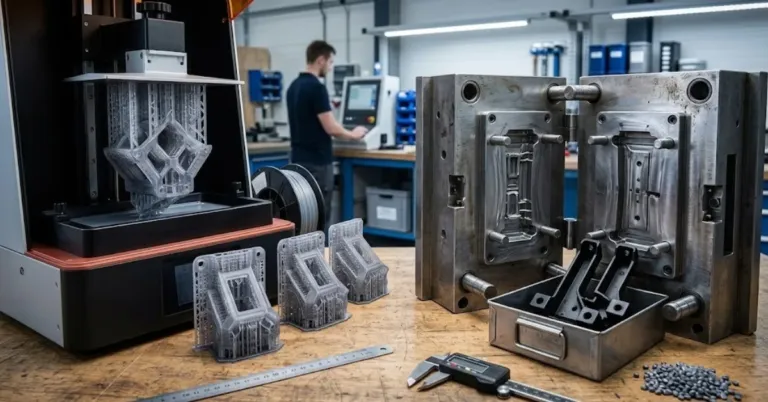
- Print casting or forming patterns for later manufacturing.
A hybrid plan can place precision, strength, complexity and cost exactly where each is needed.
09A practical process-selection workflow
- Define function, loads and environment.
- List acceptable material families.
- Mark critical dimensions and surfaces.
- Review geometry for tool access and additive constraints.
- Estimate prototype and future quantities.
- Compare total finished-part cost.
- Prototype or test when uncertainty remains.
10What should you send for a quote?
Send CAD or drawings, quantity, material requirements, critical tolerances, finish, operating environment and deadline. If no CAD exists, provide photos, dimensions or a physical reference. 3DRM Tech can review whether the part should be printed, machined or produced using both.
Not sure which process fits?
Send the part requirements and let the geometry, material and function guide the recommendation.
Request a manufacturing review →11Frequently asked questions
// common questions, answered
Is CNC machining more accurate than 3D printing?
Generally, CNC is better suited to tight machined dimensions, but achievable results depend on material, geometry, equipment and inspection requirements.
Which process makes stronger parts?
Machined stock materials often lead for structural metal parts. Printed performance depends on process, material, orientation and design.
Which process is cheaper?
Printing can be economical for complex one-offs and iterations; CNC can be economical for suitable stock geometry and repeat quantities. Compare the finished project.
Can 3D printing make metal parts?
Metal additive processes exist, but availability and economics differ. Conventional CNC is often the practical route for many metal parts.
Can printed parts be machined afterward?
Yes, some printed parts can receive secondary machining on selected interfaces when material and geometry allow it.
Which is faster?
Timing depends on queue, material, setup, build or machine time, cooling, finishing and inspection.
When should I use both?
Combine processes when a part needs additive complexity plus machined precision, or when printing accelerates prototypes and tooling.
Does CNC require tooling?
CNC requires cutting tools, workholding and programming, although it does not necessarily require a dedicated production mould.
Is 3D printing only for prototypes?
No. FDM and SLS can make suitable end-use and low-volume parts when the application is validated.
How do I choose?
Start with material, critical tolerances, geometry, finish, quantity and operating conditions, then compare total cost.