
- Can a broken or obsolete part be recreated?
- What do you need to start?
- 3D scanning vs manual measurement
- How the replacement-part workflow works
- 3D printing or CNC machining?
- Which parts are good candidates?
- Industrial and legacy equipment applications
- What affects replacement-part cost?
- Frequently asked questions
Can a broken or obsolete part be recreated?
Often, yes. The absence of an original CAD file does not automatically make a replacement-part project impossible. If enough usable geometry remains—or if the surrounding assembly provides reliable reference information—the part can be measured, scanned, reconstructed in CAD, and reviewed for manufacturing.
This is especially useful when a component is discontinued, the original supplier no longer supports the equipment, or the part was custom-made and never formally documented.
3DRM Tech provides 3D scanning and reverse engineering in Montreal, along with CAD design, 3D printing and CNC machining for suitable replacement-part projects.
What do you need to start a replacement-part project?
If the part no longer exists, photographs, mating components, old drawings, equipment documentation and known dimensions may still provide useful reference information. Feasibility depends on how much reliable geometry can be recovered.
Do you need 3D scanning, or can the part be measured manually?
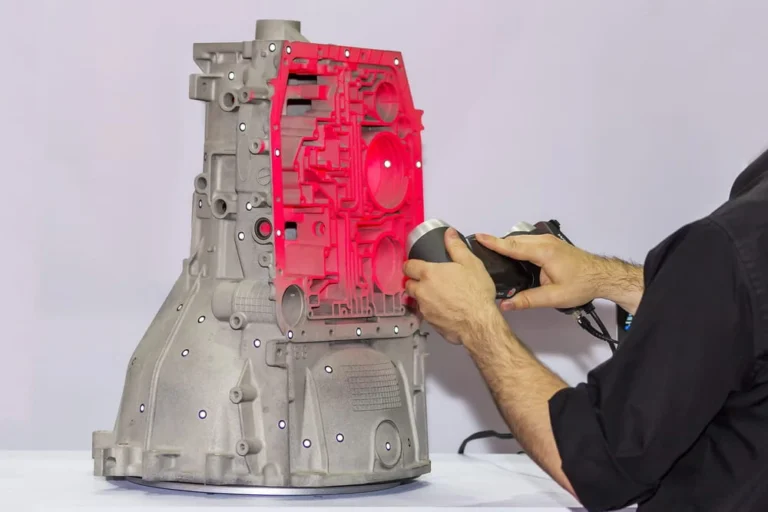
Simple prismatic parts with straightforward holes, flats and diameters may be efficiently reconstructed from conventional measurements. Complex curved surfaces, irregular contours, organic geometry or difficult-to-measure interfaces are stronger candidates for 3D scanning.
| Part condition or geometry | Likely starting approach | Why |
|---|---|---|
| Simple bracket with flat faces and holes | Measurement + CAD | Key dimensions can often be captured directly. |
| Complex molded housing | 3D scanning + CAD | Curved surfaces and transitions are difficult to recreate from isolated measurements. |
| Worn legacy component | Scan/measure + engineering interpretation | The CAD model may need to restore intended geometry rather than copy wear. |
| Broken part with missing section | Reference geometry + CAD reconstruction | The missing feature may need to be inferred from mating geometry, symmetry or other references. |
How does the replacement-part workflow work?
1. Review the part and its function
The first step is understanding what the component actually does. A visually accurate copy is not useful if a mounting face, clearance, interface or mechanical feature is wrong.
2. Capture the geometry
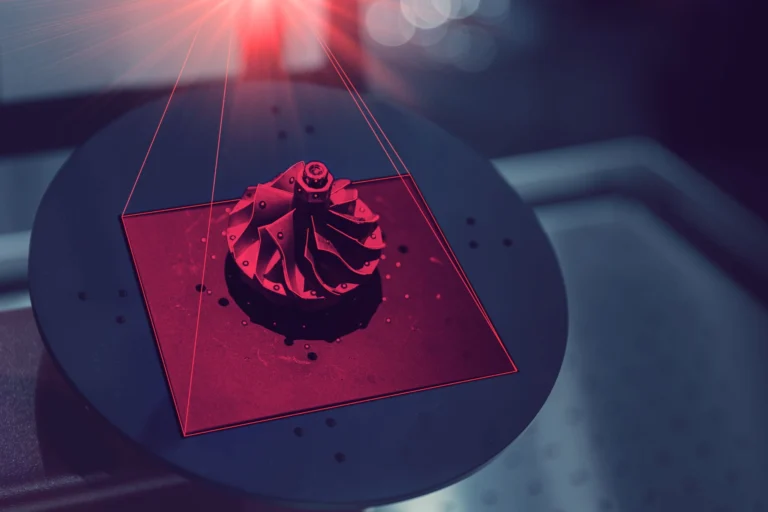
The part is measured or scanned depending on its shape and the information required.
3. Rebuild the part in CAD
Raw scan data is not always a production-ready engineering model. The geometry can be rebuilt into clean, editable CAD using a CAD design and reverse-engineering workflow.
4. Review manufacturing options
The reconstructed component is evaluated based on material, geometry, quantity, required interfaces and intended use.
5. Manufacture and evaluate
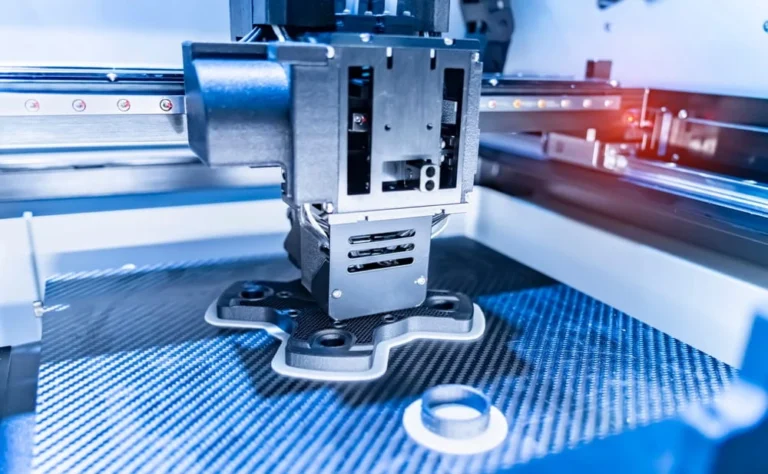
The part may move into 3D printing, CNC machining or another appropriate process. Where useful, an initial prototype can be evaluated before additional units are produced.
Should a replacement part be 3D printed or CNC machined?
The original manufacturing process does not automatically determine the best replacement process. What matters is whether the proposed process can meet the current part requirements.
3DRM Tech offers FDM, SLS and SLA 3D printing in Montreal as well as CNC machining and metalworking.
What kinds of obsolete or broken parts are good candidates?
- Machine brackets and mounts
- Equipment covers and housings
- Jigs, fixtures and tooling components
- Custom adapters and interfaces
- Discontinued plastic components
- Legacy equipment hardware
- Specialized low-volume components
- Parts that need a small design modification before being remade
Weaker candidates can include severely destroyed parts with no reliable reference geometry, standard hardware that is easier to purchase, or components whose regulatory or safety requirements cannot be properly established from the available information.
Why is reverse engineering useful for industrial and legacy equipment?
Industrial equipment can remain in service far longer than the original supply chain for its spare parts. Over time, suppliers change, tooling disappears and drawings are lost even though the machine itself remains useful.
For industrial manufacturers and machinery operators, reverse engineering creates a path from a surviving physical component back to editable digital geometry. The same problem occurs in long-life assets such as rail and transit equipment.
What affects the cost of recreating a replacement part?
- Geometry capture: simple measurement versus more involved 3D scanning.
- CAD reconstruction: complexity and how much design interpretation is required.
- Material: the material selected for the new component.
- Manufacturing process: FDM, SLS, SLA, CNC or another suitable route.
- Quantity: one prototype versus a repeat batch.
- Finishing: any required post-processing or additional operations.
The fastest way to get a meaningful review is to send photographs, dimensions, quantity and application information along with the physical part or CAD files if available.
Frequently asked questions about replacement parts in Montreal
Can you make a replacement part if I only have the broken original?
Potentially, yes. The original can be measured or 3D scanned, then reconstructed in CAD. Feasibility depends on how much usable geometry remains and whether the part’s functional requirements can be established.
Can you make a replacement part from photos?
Photos can be a useful starting point, especially when combined with dimensions, mating components or other references. A photo alone may not contain enough dimensional information for every project.
Do I need a CAD file?
No. 3DRM Tech can work from suitable physical components, scans, sketches, photographs, specifications and measurements through its CAD design and reverse-engineering services.
Can an obsolete plastic part be 3D printed?
Many suitable polymer replacement parts can be evaluated for FDM, SLS or SLA printing. The correct process and material depend on geometry, load, environment and functional requirements.
Can you recreate metal replacement parts?
Suitable metal components can be evaluated for CNC machining or metalworking after the required geometry has been established.
Where can I get an obsolete part recreated in Montreal?
3DRM Tech is based in Mount Royal, Quebec and provides 3D scanning, reverse engineering, CAD design, 3D printing and CNC machining for suitable replacement-part projects in Montreal and across Canada.
Have a broken, obsolete or unavailable part?
Send 3DRM Tech photographs, dimensions, drawings or information about the physical component. We can review whether scanning, CAD reconstruction, 3D printing or CNC machining is a suitable path.
Request a Replacement-Part Review →