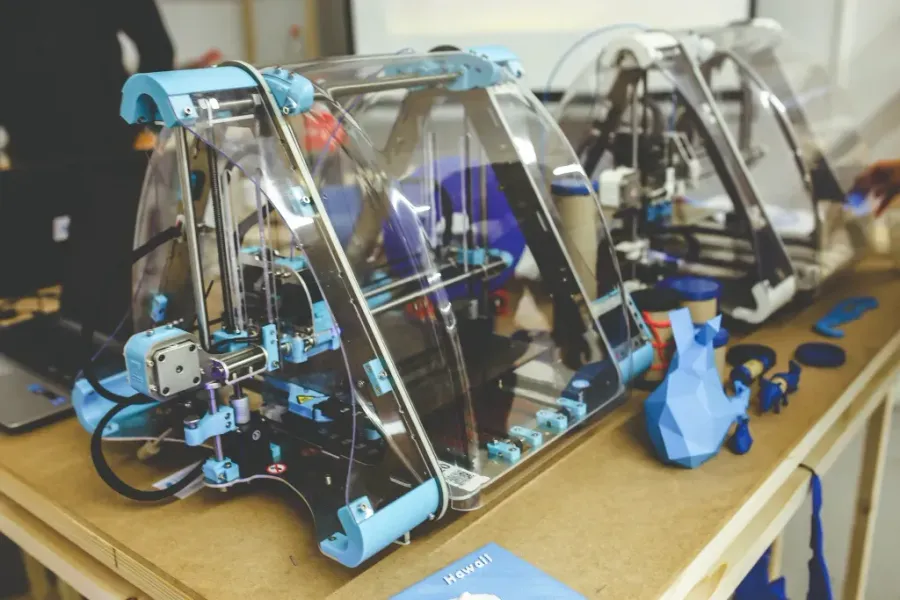
Upload a file, pick a material, get an instant price — for a lot of parts, that workflow is genuinely fine. But “custom 3D printing” usually means the part in question is the reason that workflow breaks down. Unusual geometry, a material an algorithm doesn’t stock, a design that needs a second pair of eyes before it’s printable at all. That’s where a local shop earns its keep.
What “custom” actually means in practice
It’s rarely one thing — it’s usually some combination of:
Non-standard geometry. Thin walls, tight tolerances, internal channels, or features that need to interface with an existing assembly. These are exactly the details an automated quoting tool prices without evaluating, and exactly what a DfAM-aware review catches before you pay for a print that won’t work.
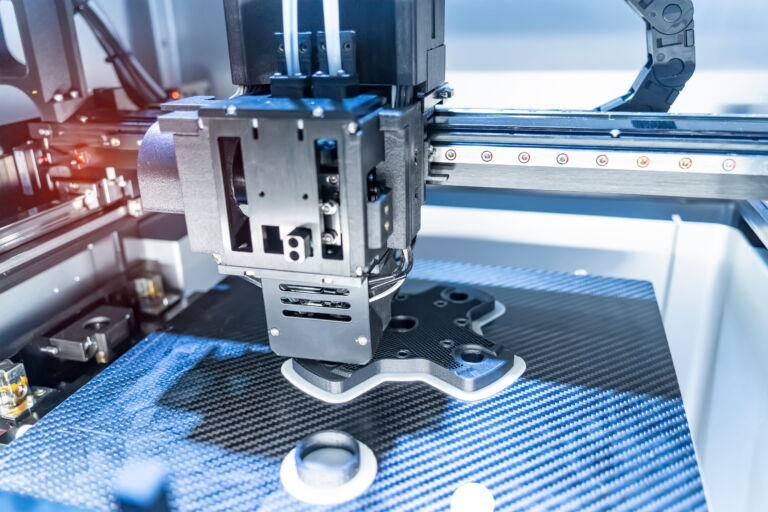
Unusual or performance materials. Composite and carbon fiber parts, for instance, aren’t a checkbox on most instant-quote platforms. If your part needs to be light *and* structurally strong, that’s a composites and carbon fiber conversation, not a dropdown menu.
Design help, not just printing. A lot of “custom” jobs start before there’s a finished file — a sketch, a rough dimension, or a part that broke and needs to be recreated. That’s CAD design and 3D scanning work, and it’s not something an upload-and-quote tool can offer at all.
Mixed processes. Some parts need 3D printing for the complex geometry and CNC machining for a mating surface or a metal insert. Coordinating that across two vendors is a hassle; doing it under one roof isn’t.
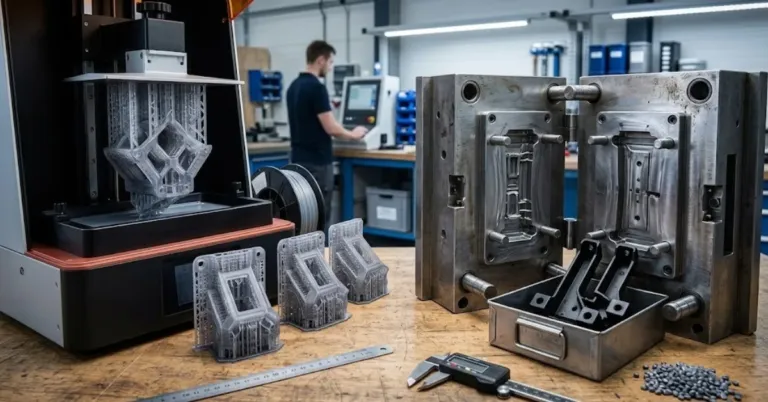
Low-volume production, not just prototypes. A custom part that works often needs to become 5, 50, or 200 of that same part. Our post on low-volume production with 3D printing covers when that’s the right call instead of jumping to injection molding or CNC batch runs.
Where online-only 3D printing services fall short
Instant-quote platforms are optimized for speed and standardization — which is exactly what makes them a poor fit for custom work:
- No design feedback. Your file gets priced and printed as-is. If it’s going to fail — a wall too thin for the material, an overhang that needs support it wasn’t designed for — you find out when the part arrives, not before. Our list of common 3D printing design mistakes is full of exactly this kind of issue.
- No material substitution advice. If the material you picked isn’t actually the best fit, an algorithm won’t tell you. A person reviewing your part will.
- No local recourse. If something’s wrong, you’re negotiating a reprint or refund with a support queue, possibly across a border, instead of talking to the shop that made it.
- No way to combine services. Need the part printed *and* CNC-finished *and* assembled? That’s multiple vendors and multiple shipments instead of one project.
What a custom local partner adds
A shop set up for custom work reviews your file before it prints, tells you if something needs adjusting, and can move between processes — 3D printing, CNC, composites, rapid prototyping — inside the same project without you having to manage separate vendors. If you’re deciding between processes for a specific part, our comparison of 3D printing vs. CNC machining is a good starting point.
Examples of what “custom” looks like in practice
- A robotics team needing a lightweight, custom-fit enclosure that standard stock parts don’t cover — see our notes on 3D printing for robotics
- A factory floor needing custom jigs and fixtures sized to a specific process, not available off the shelf
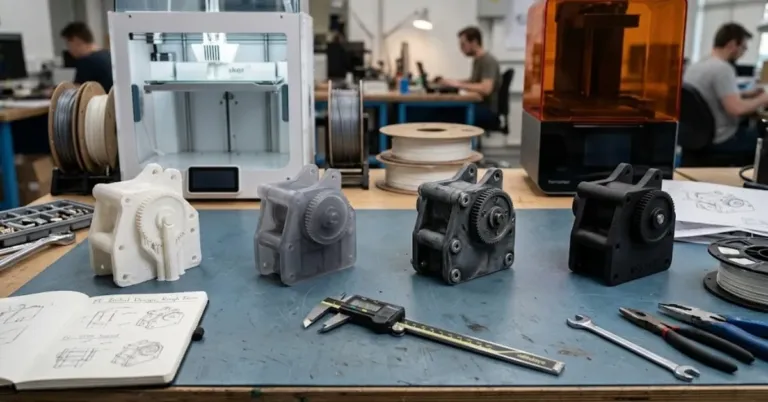
- A product team iterating on a housing design across several rounds before locking in a final version for a small production run
- Recreating a part with no drawings at all, starting from 3D scanning a physical original
Get a custom part reviewed, not just quoted
If your part doesn’t fit neatly into a dropdown menu, that’s normal — most interesting parts don’t. Send us your file, sketch, or physical part, and we’ll tell you honestly what process and material make sense before anything goes to print.