FDM 3D Printing · Materials · Applications
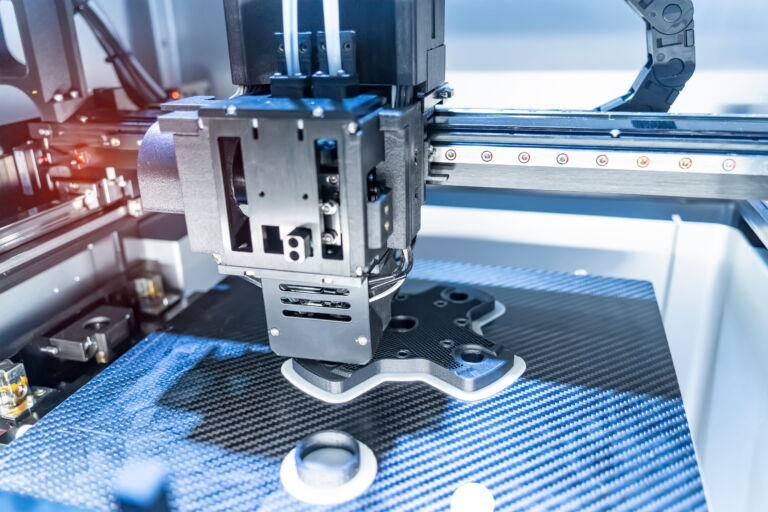
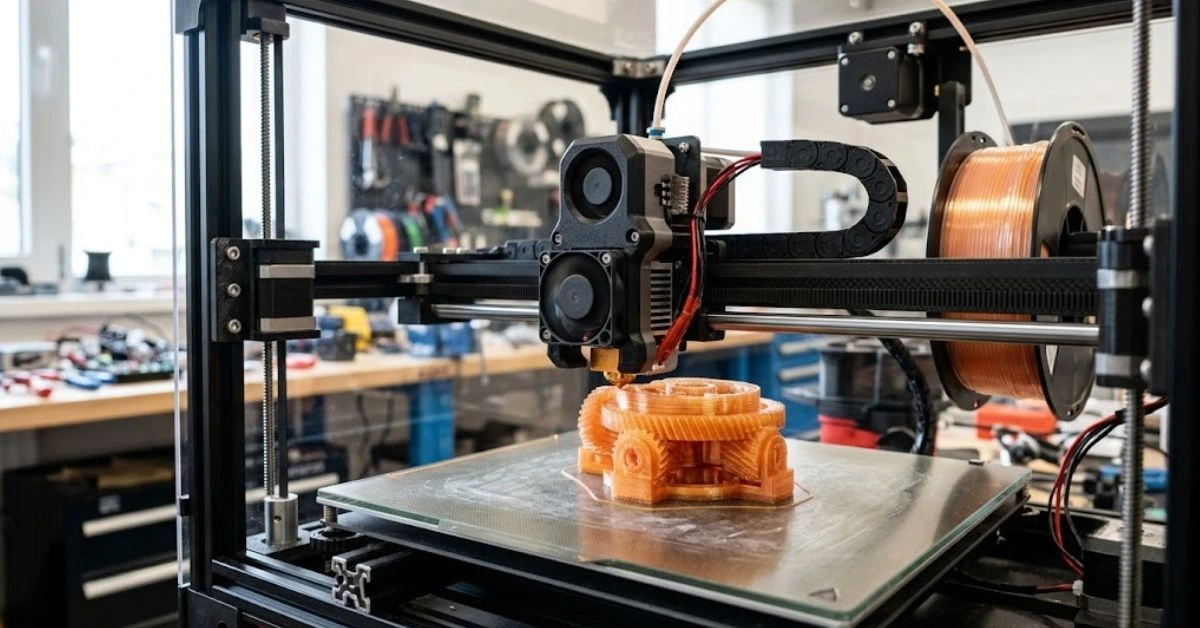
FDM 3D printing melts thermoplastic filament and deposits it through a heated nozzle, building a physical part one layer at a time.
If you have watched a desktop or industrial 3D printer trace a shape across a build plate, you have probably seen FDM. Fused Deposition Modeling is widely used because it combines accessible equipment, practical thermoplastics and a direct route from CAD to a finished component.
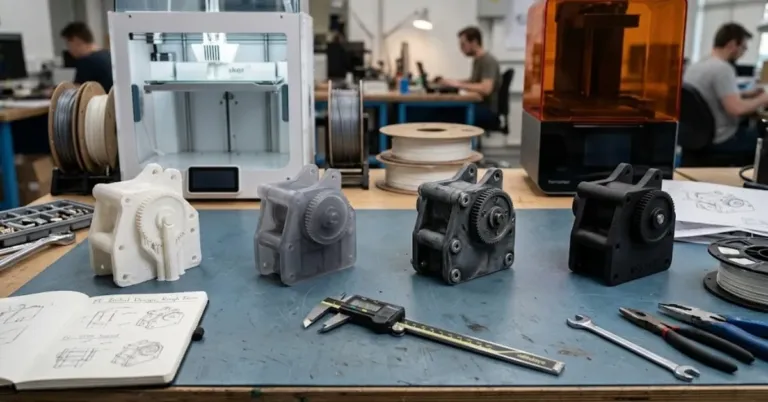
FDM can produce concept models, functional prototypes, brackets, housings, jigs, fixtures and suitable end-use parts. Its value is not that it is automatically the strongest, smoothest or most accurate process. Its value is versatility: material, internal structure, orientation and build settings can be adapted around many different applications.
3DRM Tech provides FDM, SLS and SLA 3D printing in Montreal, allowing the process to be selected around the part rather than forcing every project onto one machine.
Short answer
FDM stands for Fused Deposition Modeling. A printer feeds thermoplastic filament into a heated nozzle, places the melted material along a programmed path and repeats the operation layer by layer. FDM is usually considered for economical prototypes, tooling and functional plastic parts where practical performance matters more than a perfectly smooth surface.
01What does FDM mean in 3D printing?
FDM means Fused Deposition Modeling. The process is also commonly called FFF, or Fused Filament Fabrication. Both names describe the same general method: filament is softened or melted and deposited in paths that fuse into a layered part.
FDM is additive manufacturing because it places material only where the sliced model requires it. That contrasts with CNC machining, which begins with solid stock and removes material.
02How does FDM 3D printing work?
The printer follows a digital toolpath generated from a 3D model. Each layer contains outer walls, internal features and, when required, infill and supports. Layer height, nozzle size, speed, temperature, cooling and orientation all influence the finished part.
Prepare the CAD model
Review geometry, dimensions, wall thickness, overhangs, critical surfaces and intended use.
Slice the model
Convert the CAD into layers and define orientation, supports, shell, infill and process settings.
Heat and feed filament
Feed thermoplastic filament through a heated print head until it reaches the required processing condition.
Deposit each layer
Move the nozzle along the toolpath, depositing material that bonds with the layer below.
Remove supports and finish
Remove support material and complete any specified inserts, assembly or finishing.
Inspect and test
Review the part and validate it against actual fit and function requirements.
03Common FDM 3D printing materials
The correct material depends on load, temperature, impact, flexibility, chemicals, moisture, UV exposure, appearance and service life. A material name alone does not guarantee performance.
| Material | Common reasons to consider it | Important considerations |
|---|---|---|
| PLA | Concept models, visual checks and low-demand prototypes | Limited heat resistance for many functional environments |
| PETG | Practical functional parts, toughness and useful chemical resistance | Surface and stiffness differ from PLA or engineering nylons |
| ABS | Durable housings and parts needing improved temperature capability | Warp control and process conditions matter |
| ASA | Outdoor-facing parts where weathering and UV matter | Application and exposure still require review |
| Nylon | Wear, toughness and demanding functional geometry | Moisture handling and dimensional behaviour matter |
| TPU | Flexible parts, pads, guards and compliant features | Hardness, wall geometry and printability affect behaviour |
04Benefits and limitations of FDM
Why choose FDM
- Economical for many one-off parts
- Broad thermoplastic selection
- Useful for larger prototypes
- Fast digital design revisions
- Variable walls and internal infill
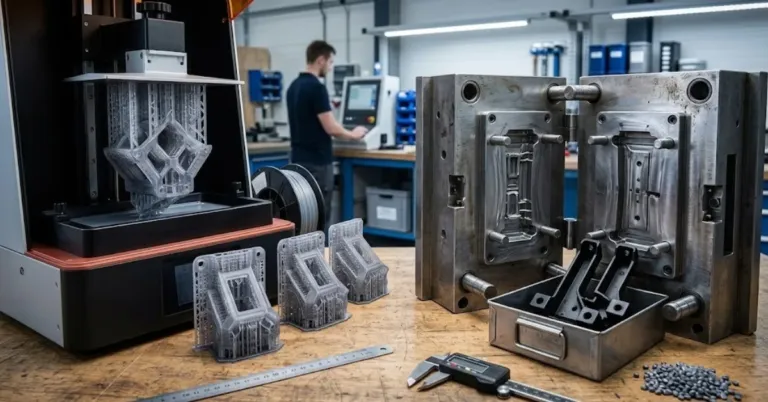
- No dedicated mould tooling
What to consider
- Visible layer lines
- Direction-dependent strength
- Supports for some overhangs
- Warping in certain materials
- Fine detail below SLA capability
- Post-processing may be required
05Is FDM strong enough for functional parts?
It can be. Strength depends on material, wall structure, infill, feature geometry, layer bonding and the direction of applied loads. A solid-looking print is not automatically suitable for a structural application. Print orientation should place critical loads in favourable directions wherever practical.
Threaded inserts, metal hardware, thicker interfaces and replaceable wear features can improve many assemblies. Safety-critical parts require appropriate engineering, material verification and real testing.
06What is FDM printing used for?
For development work, rapid prototyping can connect CAD changes with repeated physical tests before production decisions are finalized.
07How should a part be designed for FDM?
Start with the operating requirement. Use adequate wall thickness, avoid unsupported geometry where possible, provide suitable clearances, allow for nozzle and layer limitations, and separate critical surfaces from cosmetic ones. Consider how supports will be removed and whether the part needs inserts, fasteners or secondary machining.
If no production-ready file exists, CAD design support can turn sketches, dimensions, photos or references into manufacturable geometry.
08FDM vs. SLS and SLA
| Process | Primary advantage | Typical fit |
|---|---|---|
| FDM | Practical cost, thermoplastics and size range | Functional prototypes, fixtures, housings and larger parts |
| SLS | Complex nylon geometry without conventional supports | Durable parts, snap fits and nested batches |
| SLA | Fine detail and smooth resin surfaces | Visual models, master patterns and detailed features |
For a deeper decision framework, read FDM, SLA or SLS: Which Process Fits Your Part?
09What affects FDM printing cost?
Cost is influenced by material, part size, print time, layer height, supports, machine setup, quantity, finishing and inspection. Reducing unnecessary bulk, designing practical supports and consolidating compatible parts can improve economics. 3DRM Tech currently has no fixed minimum part quantity, while a $500 minimum overall project value applies.
10What should you send for an FDM quote?
Send the best CAD file available, quantity, intended use, material preferences, critical dimensions, expected load, operating environment, finish requirements and delivery location. If FDM is not the right process, the team can recommend SLS, SLA, CNC or another option.
Have a functional part to print?
Send the file and explain what the component must do. 3DRM Tech will review material, orientation and process options.
Request a 3D printing quote →11Frequently asked questions
// common questions, answered
What does FDM stand for?
FDM stands for Fused Deposition Modeling, a process that deposits melted thermoplastic filament layer by layer.
Is FDM the same as FFF?
For practical purposes, yes. FFF is the open term for the same general filament-extrusion process.
What materials can FDM use?
Common options include PLA, PETG, ABS, ASA, nylon and TPU. Availability and suitability depend on the project.
Are FDM parts strong?
They can be suitable for many functional uses when material, geometry, wall structure and orientation match the loads.
Why does print orientation matter?
Layer bonding creates direction-dependent behaviour, so the part should be oriented around critical loads and surfaces.
Does FDM need support material?
Some overhangs, bridges and internal features require supports. Design changes or another process may reduce them.
Can FDM make end-use parts?
Yes, when material and performance requirements fit the application and the design has been validated.
What surface finish does FDM have?
FDM normally shows layer lines. Sanding, coating or other finishing may improve appearance where suitable.
Is FDM cheaper than SLS or SLA?
It is often economical for straightforward parts, but size, material, quantity, finish and geometry determine the real cost.
What file should I send?
Send STEP, STL or your best CAD file plus quantity, use, material, critical dimensions and finish requirements.