Impression 3D SLS · Pièces en nylon · Guide complet
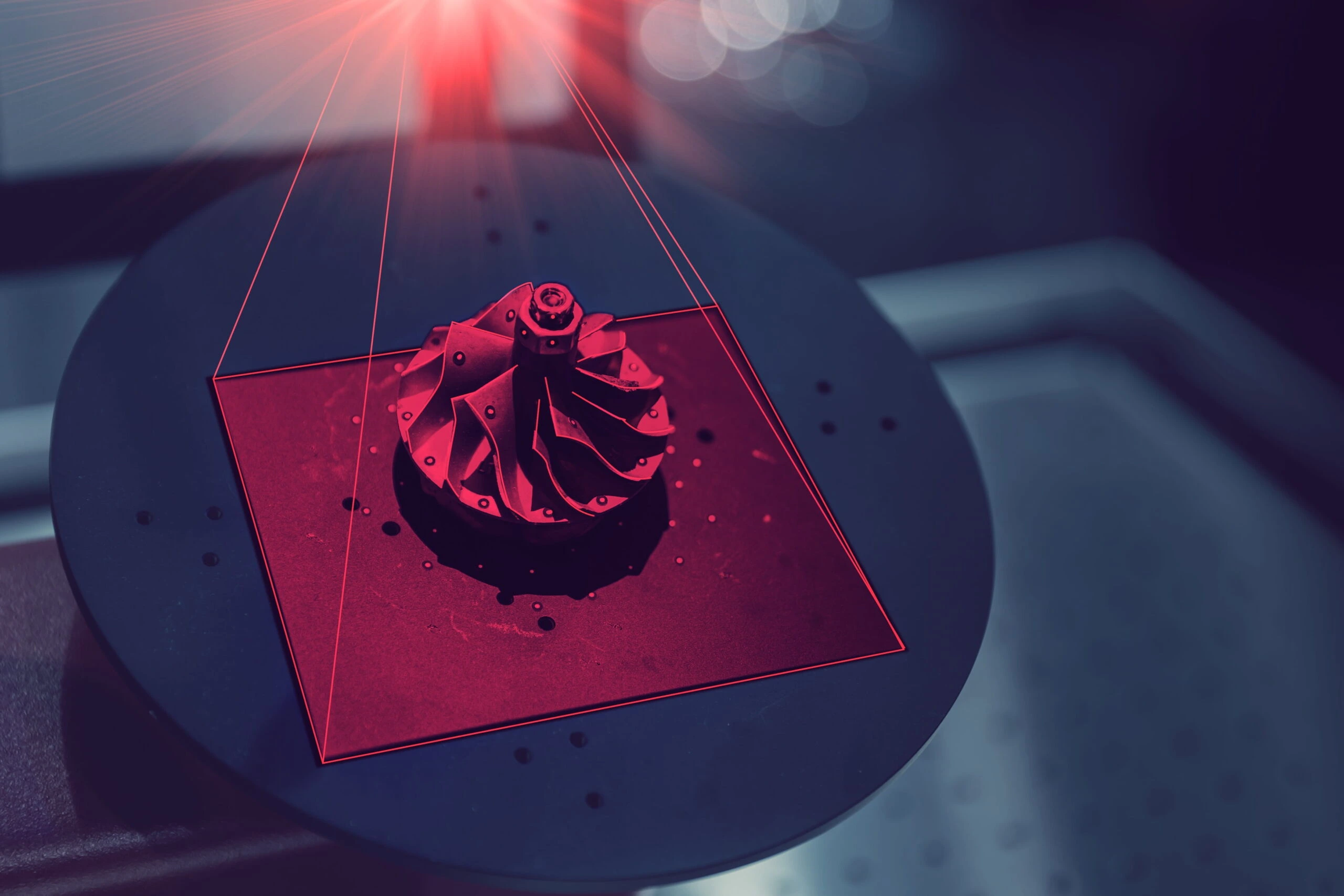
Frittage laser sélectif (SLS) Le frittage sélectif par laser (SLS) est un procédé d'impression 3D sur lit de poudre qui utilise la chaleur et l'énergie laser pour fusionner de la poudre polymère en pièces durables, couche par couche. Grâce au soutien de la poudre environnante, le SLS permet de réaliser des géométries complexes sans structures de support conventionnelles.
Lorsqu'une pièce doit résister à une manipulation intensive, à des assemblages répétés ou à une utilisation mécanique intensive, l'impression 3D SLS est souvent une solution à envisager. Ce procédé combine des plastiques techniques résistants à une technique de fabrication à base de poudre, permettant de réaliser des pièces complexes, des lots imbriqués et des géométries fonctionnelles difficiles à produire efficacement par impression 3D à filament ou à résine.
Le frittage sélectif par laser (SLS) ne se limite pas aux prototypes visuels. Il permet de réaliser des prototypes fonctionnels, des supports, des boîtiers, des conduits, des assemblages à enclenchement, des gabarits, des dispositifs de fixation, des pièces de rechange et des composants finaux en petites séries. Le choix de la technologie la plus adaptée dépend de l'application : le comportement du matériau, la géométrie, la finition, les tolérances, la quantité, l'environnement d'utilisation et le budget sont autant d'éléments à prendre en compte.
Ce guide explique le fonctionnement du frittage sélectif par laser (SLS), les avantages du nylon SLS, sa comparaison avec les procédés FDM et SLA, les points à prendre en compte lors de la conception d'une pièce et les informations à fournir pour demander un devis. Service professionnel d'impression 3D à Montréal.
Réponse courte
Impression 3D SLS Cette technique utilise un laser pour fusionner de fines couches de poudre polymère à l'intérieur d'une chambre de fabrication chauffée. La poudre non fusionnée sert de support aux pièces pendant l'impression, permettant ainsi la réalisation de géométries complexes en nylon sans structures de support supplémentaires. Elle est couramment privilégiée pour les prototypes fonctionnels, les pièces finales durables et les petites séries de production.
01Qu'est-ce que l'impression 3D SLS ?
SLS signifie Frittage sélectif par laser. Elle appartient à la famille des procédés de fabrication additive par fusion sur lit de poudre. Au lieu d'extruder un filament à travers une buse ou de polymériser une résine liquide dans une cuve, une machine SLS dépose une fine couche de poudre polymère et fusionne sélectivement la section transversale de chaque pièce.
Une fois la première couche fusionnée, la plateforme de construction se déplace, une nouvelle couche de poudre est appliquée et le processus se répète. Les pièces finies restent entourées de poudre jusqu'à leur refroidissement complet, puis elles sont déballées.
La poudre libre remplit une seconde fonction importante : elle soutient les surplombs, les éléments internes et les composants environnants pendant la fabrication. Ceci élimine de nombreuses structures de support nécessaires aux autres procédés d’impression 3D et offre aux concepteurs une plus grande liberté pour regrouper les pièces ou placer plusieurs composants dans le volume de fabrication.
Le SLS est un procédé, pas un matériau. Le nylon est la famille de matériaux la plus étroitement associée au frittage laser sélectif (SLS), mais la formulation exacte de la poudre influe sur la rigidité, la ténacité, la flexibilité, le comportement thermique, la finition et le coût.
02Comment fonctionne le frittage laser sélectif ?
Un projet SLS professionnel commence avant même la mise en marche de la machine. Le modèle CAO, l'orientation, la stratégie d'imbrication, les exigences en matière de matériaux et de finitions sont autant d'éléments qui influencent le résultat.
Examiner et préparer le modèle
La pièce est contrôlée afin de vérifier sa fabricabilité, l'épaisseur de ses parois, les jeux, la présence de poudre, les caractéristiques sensibles à l'orientation et autres exigences du projet. Plusieurs composants peuvent être disposés dans le volume de fabrication.
Préchauffer le lit de poudre
La chambre de fabrication est chauffée à une température proche de celle du matériau. Cela réduit l'énergie supplémentaire que le laser doit fournir et contribue à maîtriser le comportement thermique pendant l'impression.
Étalez et fusionnez chaque couche
Un système de revêtement dépose une fine couche de poudre. Le laser trace la section transversale requise et fusionne les zones sélectionnées. La plateforme se déplace ensuite et le cycle se répète jusqu'à la fin de la fabrication.
Refroidissez la construction terminée
Le lit de poudre doit refroidir de manière contrôlée avant d'être déballé. Le refroidissement fait partie intégrante du cycle de production et contribue à réduire les déformations ou les dommages qui pourraient survenir si les pièces chaudes étaient retirées trop tôt.
Déballez et nettoyez les pièces
Les pièces sont détachées de la pâte de poudre et les résidus sont éliminés des surfaces extérieures, des orifices et des parties internes. Des finitions complémentaires peuvent être appliquées en fonction de l'aspect et de la fonction.
Inspecter et livrer
Les composants finis sont vérifiés par rapport aux exigences du projet. Les fichiers validés peuvent ensuite servir à une nouvelle itération de prototype ou à de futures productions.
03Avantages et limites de l'impression 3D SLS
Aucun procédé de fabrication n'est idéal pour tous les composants. Comprendre les deux aspects du frittage sélectif par laser (SLS) permet d'éviter qu'une technologie aussi intéressante ne soit utilisée à mauvais escient.
Pourquoi les ingénieurs choisissent SLS
- Pas de structures de support conventionnelles
- Géométrie complexe et fermée
- Options en nylon durable de qualité technique
- Enclenchements fonctionnels et ensembles mobiles
- Imbrication efficace des volumes de construction
- Flexibilité du prototype à la production
- Aucun moule d'injection dédié n'est requis.
Ce qu'il faut considérer
- Surface naturelle poudreuse ou légèrement texturée
- Le refroidissement allonge le cycle de production.
- La poudre libre doit être évacuée des cavités.
- Une géométrie fine et large peut être sujette à la déformation.
- Les détails cosmétiques fins peuvent être préférables pour le SLA.
- L'usinage peut convenir aux interfaces les plus étroites.
- Les options de matériaux varient selon l'équipement.
Le frittage sélectif par laser (SLS) permet de réduire les coûts d'assemblage en combinant des fonctionnalités qui nécessiteraient autrement la fabrication de plusieurs pièces. Toutefois, la géométrie consolidée doit permettre l'élimination des résidus de poudre et l'inspection, la maintenance et l'utilisation en toute sécurité de la pièce finie.
04Matériaux SLS et options en nylon
Le choix des matériaux doit se fonder sur les fonctionnalités requises pour la pièce, et non sur le seul nom du matériau. Les charges, la résistance aux chocs, la flexibilité, la température, les produits chimiques, l'humidité, les exigences de surface et les exigences réglementaires doivent être analysées avant la production.
nylon PA12
Le PA12 est un matériau SLS largement utilisé car il offre un bon compromis entre résistance, ténacité, stabilité dimensionnelle et précision des détails. Il est couramment employé pour la fabrication de boîtiers, supports, conduits, gabarits, dispositifs de fixation, clips, pièces à enclenchement et composants fonctionnels répétitifs.
nylon PA11
Le PA11 est souvent choisi lorsque la ductilité, la résistance aux chocs ou la résistance aux flexions répétées sont primordiales. Sa disponibilité, sa finition et ses propriétés mécaniques dépendent de la poudre utilisée et du système de production.
Nylon chargé de verre
Le nylon renforcé de fibres de verre peut offrir une rigidité accrue et une meilleure stabilité dimensionnelle pour certaines applications, mais cette rigidité supplémentaire peut entraîner des modifications des caractéristiques d'impact ou de flexion. Son choix doit donc être effectué en fonction de la charge réelle.
Poudres souples
Certains systèmes de fusion sur lit de poudre permettent de traiter des matériaux flexibles tels que le TPU pour la fabrication de joints, de composants de protection et de pièces aux géométries flexibles. Il convient de vérifier la dureté, le rebond, l'état de surface et les dimensions attendues pour chaque matériau.
Modifications de la disponibilité des matériaux. Demandez à 3DRM Tech quelles options de poudre SLS, de couleur et de finition sont disponibles pour votre projet plutôt que de concevoir votre projet en fonction d'une fiche technique supposée.
05Résistance, précision et état de surface du SLS
Les pièces SLS sont-elles résistantes ?
Les pièces en nylon SLS peuvent être suffisamment résistantes pour de nombreux prototypes fonctionnels et applications finales. Leurs performances réelles dépendent du matériau choisi, de la géométrie, de l'épaisseur de paroi, de l'orientation, des paramètres de la machine, des conditions environnementales ainsi que du type et de la direction de la charge appliquée.
Comparativement aux pièces FDM classiques, les pièces SLS offrent souvent un comportement plus uniforme dans différentes directions, car elles ne reposent pas sur des extrusions de la même manière. Cela ne signifie pas pour autant que chaque pièce SLS est parfaitement isotrope ni qu'elle égalera systématiquement une pièce moulée par injection ou usinée. Les exigences fonctionnelles doivent être comparées aux données du matériau et des essais doivent être réalisés lorsque toute défaillance s'avérerait coûteuse.
Quelle est la précision du SLS ?
La précision dépend des dimensions globales, de la géométrie, de l'épaisseur des parois, de l'emplacement des éléments, du comportement thermique et des paramètres de fabrication. Les surfaces fines et larges, ainsi que les variations d'épaisseur abruptes, peuvent présenter un comportement différent de celui des géométries compactes et bien supportées. Si un trou, un ajustement ou une interface est critique, veuillez le préciser lors de votre demande de devis afin que le modèle et la méthode d'inspection puissent être adaptés.
Quel type de finition de surface produit le SLS ?
Les pièces SLS standard présentent généralement une surface mate uniforme et légèrement texturée. Elles ne comportent pas de marques de support conventionnelles, mais leur surface n'est pas aussi lisse ni brillante que celle de nombreuses pièces en résine SLA. Selon le projet, les pièces peuvent être nettoyées, polies, teintées, revêtues, scellées, peintes ou usinées localement.
06Applications courantes des pièces en nylon SLS
Le frittage sélectif par laser (SLS) est précieux lorsque la complexité et la fonction priment sur une surface parfaitement lisse, semblable à celle d'un moule. Les applications typiques incluent :
Un prototype doit permettre de tester les caractéristiques essentielles à l'application réelle. Un composant d'apparence correcte peut néanmoins nécessiter des tests d'assemblage, d'utilisation répétée, de résistance aux chocs, à la chaleur, aux produits chimiques, à l'humidité, à la fatigue ou aux intempéries.
Test avant production Explorez les services de prototypage rapide à Montréal→07SLS vs. FDM, SLA et moulage par injection
Le choix du procédé de fabrication dépend de l'ensemble des besoins. Le tableau comparatif ci-dessous constitue un point de départ et ne saurait se substituer à l'examen du fichier CAO et de l'application.
// comparaison rapide des processus
| Processus | Force typique | Géométrie et finition | Souvent choisi pour |
|---|---|---|---|
| SLS | Options de nylon technique durable | Géométrie complexe sans support ; finition texturée mate | Prototypes fonctionnels, pièces finales et lots imbriqués |
| FDM | Thermoplastiques résistants présentant un comportement dépendant de l'orientation | Géométrie pratique ; lignes de couches visibles et considérations relatives aux supports | Prototypes, outillage et pièces fonctionnelles de plus grande taille à moindre coût |
| SLA | Cela dépend du matériau ; de nombreuses résines privilégient les détails ou la finition. | Détails fins et surfaces lisses | Modèles visuels, patrons maîtres et prototypes détaillés |
| Moulage par injection | vastes options de matériaux de production | Finition moulée reproductible après outillage | Des volumes plus importants qui justifient la conception des moules et l'outillage. |
SLS vs. FDM
La fabrication additive par dépôt de fil fondu (FDM) est souvent économique pour les pièces uniques, les composants de grande taille et les géométries fonctionnelles simples. Le frittage sélectif par laser (SLS) peut être préférable pour les formes complexes, les pièces en série, les assemblages par encliquetage et les pièces où la suppression des supports conventionnels offre une plus grande liberté de conception. La taille de la pièce, sa finition, le matériau et les coûts de production par lot peuvent influencer ce choix.
SLS vs. SLA
On privilégie généralement la stéréolithographie (SLA) lorsque la finesse des détails visuels et la régularité des surfaces sont essentielles. Le frittage sélectif par laser (SLS) est plus souvent associé aux pièces en nylon résistant et aux géométries fonctionnelles destinées à la production en série. Les résines spéciales peuvent offrir des performances exceptionnelles ; l’application et la fiche technique du matériau restent donc des éléments importants.
SLS vs. moulage par injection
Le frittage sélectif par laser (SLS) évite l'utilisation d'outillage de moulage dédié et permet des modifications de conception rapides, la personnalisation et la production de petites séries. Le moulage par injection peut offrir des coûts unitaires bien plus bas à grande échelle, mais il nécessite un investissement en outillage et une conception plus stable. Le SLS est souvent utile pour les essais pilotes, la production transitoire et les produits dont la demande ne justifie pas encore l'utilisation d'un moule.
Sélection du processus Lisez le comparatif complet FDM vs SLS vs SLA→08Comment concevoir des pièces pour l'impression 3D SLS
Le frittage sélectif par laser (SLS) offre une grande liberté géométrique, mais ne dispense pas de la conception en vue de la fabrication. Il convient de vérifier les spécifications relatives à la machine, au matériau et à l'application avant de finaliser la géométrie de production.
Utiliser une épaisseur de paroi appropriée
Les parois doivent être suffisamment épaisses pour permettre l'impression, le nettoyage et résister à l'utilisation. Des parois trop fines risquent de se déformer, de se casser ou de fléchir lors du déballage. L'épaisseur requise varie selon le matériau, la longueur de la paroi, sa géométrie et la charge appliquée.
Prévoir un dégagement entre les éléments mobiles ou accolés
Il est parfois possible d'imprimer simultanément des ensembles imbriqués et mobiles, mais un jeu insuffisant peut entraîner la fusion de certains éléments ou le piégeage de la poudre. L'ajustement doit être adapté à la machine, à l'orientation, au matériau et au mouvement prévu.
Prévoir des voies d'évacuation pour la poudre
Les pièces creuses et les canaux internes doivent comporter des ouvertures accessibles pour permettre l'évacuation des poudres. Une cavité fermée risque de retenir des matières, d'alourdir le véhicule et de rendre le nettoyage ou l'inspection impossibles.
Gérer les surfaces larges et minces
Les grandes surfaces planes et peu épaisses peuvent être sensibles aux déformations thermiques. Des nervures, une courbure, des variations d'épaisseur ou une orientation différente peuvent atténuer ce problème, mais la solution optimale dépend de la conception.
Définir les trous, filetages et interfaces critiques
Les petits trous, les filetages et les surfaces d'accouplement de précision peuvent nécessiter une compensation, un usinage secondaire, des plaquettes ou une autre stratégie de production. Marquez clairement les dimensions critiques au lieu de supposer que la même tolérance est requise partout.
Utilisez un texte lisible et des détails durables
Les textes en relief ou gravés et les petits détails doivent être dimensionnés en fonction du procédé et de la finition choisis. Les détails trop fins apparaissant dans le modèle CAO peuvent s'estomper à l'impression ou à la finition.
Si le modèle est encore en cours de développement, 3DRM Tech Service de conception CAO peut aider à préparer la géométrie autour du parcours d'impression et de fabrication prévu.
09Le frittage sélectif par laser (SLS) est-il adapté à la production en petites séries ?
Oui, lorsque le matériau, la géométrie, les performances et le coût correspondent à l'application. Le frittage sélectif par laser (SLS) permet de produire plusieurs pièces dans le même volume de fabrication sans outillage de moule dédié. Il est donc particulièrement adapté aux essais pilotes, à la production transitoire, aux pièces de rechange, aux composants personnalisés et aux lots réguliers à demande modérée.
Le SLS peut s'avérer particulièrement utile lorsque
- La quantité est trop faible pour justifier l'outillage par moulage par injection.
- Le design peut encore changer d'un lot à l'autre.
- Plusieurs variantes de pièces sont nécessaires
- Une géométrie complexe augmenterait les coûts de fabrication conventionnels
- Les pièces de rechange ne sont nécessaires qu'en cas de panne de l'équipement.
- Un pont de production est nécessaire pendant la préparation de l'outillage
La production en petite série exige toujours un contrôle des versions, des fichiers reproductibles, des matériaux définis, une finition convenue et des contrôles qualité appropriés. Un prototype validé ne constitue pas automatiquement un plan de production ; il en est la base.
Prototype pour pièces répétitives Explorez la fabrication en petites séries avec la technologie 3DRM→10Combien coûte l'impression 3D SLS ?
Le prix du frittage laser sélectif (SLS) est établi en fonction du projet. La taille de la pièce à elle seule ne détermine pas le coût, car la fabrication complète, l'utilisation des matériaux, la stratégie d'emballage, le refroidissement, le déballage, le nettoyage et la finition influent tous sur la production.
Les facteurs de coût courants comprennent:
- Dimensions du volume de la pièce et de la boîte englobante
- Exigences en matière de matériaux et de couleurs
- Nombre de pièces et comment elles peuvent être imbriquées
- Épaisseur de la paroi et quantité de poudre encapsulée
- Géométrie, orientation et risque de distorsion
- Accès pour le nettoyage des canaux et cavités internes
- Vérification dimensionnelle requise
- Finition de surface, teinture, revêtement ou usinage secondaire
- Emballage, livraison et calendrier du projet
Le prix unitaire peut baisser si plusieurs pièces sont utilisées de manière optimale lors de la fabrication, mais la quantité seule ne garantit pas un prix inférieur. Une pièce compacte qui s'emboîte bien peut se comporter différemment d'un grand composant creux occupant un volume de fabrication important.
3DRM Tech n'impose actuellement aucune quantité minimale de pièces, tandis que valeur totale minimale du projet : 500 Cela s'applique. Les projets et les calendriers SLS font l'objet d'un devis individuel après que l'équipe ait examiné les fichiers CAO, la quantité, le matériau et l'application.
11Que devez-vous envoyer pour obtenir un devis SLS ?
Il n'est pas nécessaire de choisir le procédé avant de contacter 3DRM Tech. Si le frittage laser sélectif (SLS) ne convient pas, l'équipe peut comparer les options FDM, SLA, CNC ou toute autre solution de fabrication adaptée à vos besoins.
S’il n’existe pas de modèle prêt pour la production, veuillez envoyer un dessin, un croquis, une pièce de référence, un scan ou une description de vos besoins. Le développement CAO peut être inclus avant l’impression.
Besoin de pièces en nylon durable ?
Envoyez-nous votre fichier CAO, la quantité et les spécifications de votre projet. 3DRM Tech analysera la géométrie et vous recommandera le frittage sélectif par laser (SLS) ou un autre procédé de fabrication adapté.
Demander un devis pour un projet SLS→12Questions fréquentes sur le SLS
// questions courantes, réponses
Que signifie SLS en impression 3D ?
SLS signifie frittage laser sélectif. Il s'agit d'un procédé de fusion sur lit de poudre dans lequel l'énergie laser fusionne des zones sélectionnées de poudre polymère pour construire une pièce couche par couche.
Comment fonctionne l'impression 3D SLS ?
Une machine SLS dépose une fine couche de poudre dans une chambre de fabrication chauffée. Un laser fusionne la section transversale de chaque pièce, la plateforme se déplace et une nouvelle couche est déposée. Le cycle se répète jusqu'à ce que la fabrication soit terminée, refroidie, déballée et nettoyée.
L'impression 3D SLS nécessite-t-elle des supports ?
Le frittage sélectif par laser (SLS) ne nécessite généralement pas de structures de support imprimées classiques, car la poudre libre entoure et soutient les composants pendant la fabrication. Les conceptions doivent néanmoins permettre l'évacuation de la poudre piégée.
Quels matériaux sont utilisés pour l'impression SLS ?
Les poudres de nylon telles que le PA12 et le PA11 sont couramment utilisées en frittage laser sélectif (SLS). Des poudres de nylon chargées de fibres de verre et des poudres flexibles peuvent également être disponibles. Il convient de vérifier le matériau approprié et sa disponibilité pour chaque projet.
Les pièces en nylon SLS sont-elles résistantes ?
Le nylon SLS convient à de nombreux prototypes fonctionnels et composants finaux. Ses performances réelles dépendent du matériau, de la géométrie, de l'épaisseur de paroi, du procédé de fabrication, de l'environnement d'exploitation et des charges appliquées. Les applications critiques doivent être validées par des études d'ingénierie et des essais appropriés.
Le SLS est-il plus résistant que le FDM ?
Pas dans tous les cas. Le frittage sélectif par laser (SLS) offre souvent un comportement multidirectionnel plus uniforme et gère bien les géométries complexes du nylon, tandis que le dépôt de fil fondu (FDM) propose une large gamme de thermoplastiques résistants et peut s'avérer économique pour les pièces de grande taille ou simples. Comparez les matériaux, la géométrie et le cas de charge spécifiques.
Quel est le fini de surface des pièces SLS ?
Les pièces SLS standard présentent généralement une surface mate uniforme et légèrement texturée. Des traitements supplémentaires tels que le nettoyage, le polissage, la teinture, le revêtement, le scellement, la peinture ou l'usinage sélectif peuvent être proposés selon la pièce et le résultat souhaité.
Le frittage laser sélectif (SLS) peut-il produire des pièces mobiles ou emboîtables ?
Ce procédé permet de réaliser en une seule étape la fabrication d'ensembles mobiles ou emboîtables, la poudre libre assurant le maintien de la géométrie. Un dégagement suffisant et un accès aisé pour l'évacuation de la poudre sont indispensables, et la conception doit être adaptée à la machine et au matériau utilisés.
Le frittage sélectif par laser (SLS) peut-il être utilisé pour la fabrication de pièces finies ?
Oui. Le frittage sélectif par laser (SLS) peut prendre en charge la production en petites séries lorsque le matériau, la géométrie, la finition, les tolérances et les exigences de test sélectionnés correspondent à l'application. Il est également utile pour les essais pilotes, la production transitoire et les pièces de rechange.
Quelle est la précision de l'impression 3D SLS ?
La précision dépend de l'équipement, du matériau, de la géométrie, des dimensions, de l'épaisseur de paroi, du comportement thermique et du paramétrage du processus. Il est essentiel d'identifier les dimensions et ajustements critiques avant d'établir un devis afin que l'équipe puisse vérifier si le frittage laser sélectif (SLS) et les opérations secondaires éventuelles permettent de répondre aux exigences.
Combien de temps dure l'impression SLS ?
Le délai comprend la vérification des fichiers, la planification de la production, l'impression, le refroidissement contrôlé, le déballage, le nettoyage, la finition et l'inspection. 3DRM Tech établit des devis personnalisés pour les processus SLS, car les dimensions, la quantité, les matériaux et les exigences de finition varient selon les pièces.
Quel fichier dois-je envoyer pour obtenir un devis SLS ?
Veuillez envoyer un fichier STEP, STL ou le meilleur fichier CAO disponible, en précisant la quantité, l'utilisation prévue, les matériaux nécessaires, la finition souhaitée et les dimensions critiques. Si aucun fichier CAO n'est disponible, veuillez envoyer un croquis, un dessin, une photographie, un scan ou une description du projet pour analyse.